

 SUEDE
SUEDEDesignathon
2024
ScrapAsset: UI/UX case study
ScrapAsset was developed during a 24-hour university competition (SUEDE’s 2024 DESIGNATHON), where our team tackled the food waste challenge.
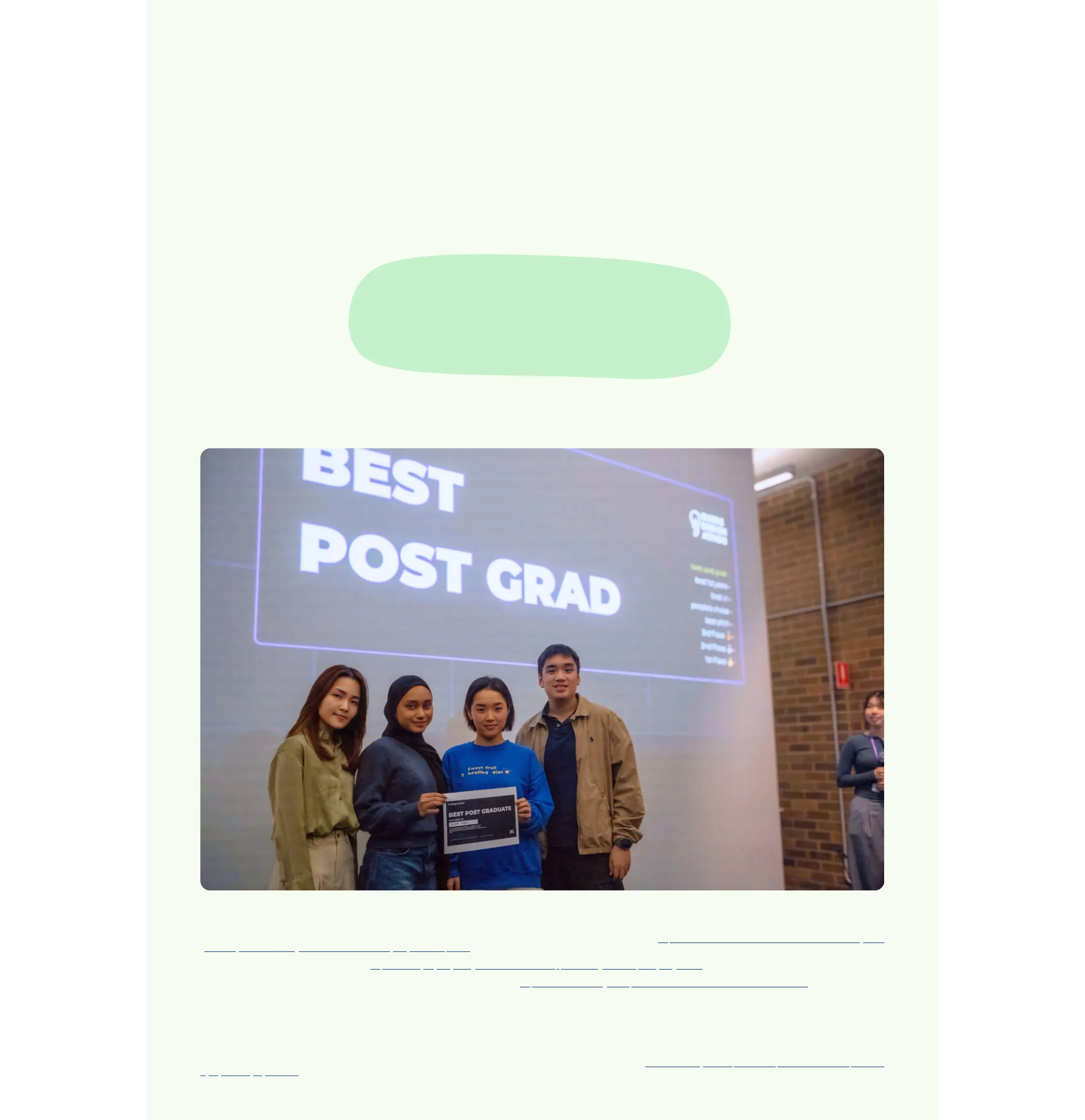
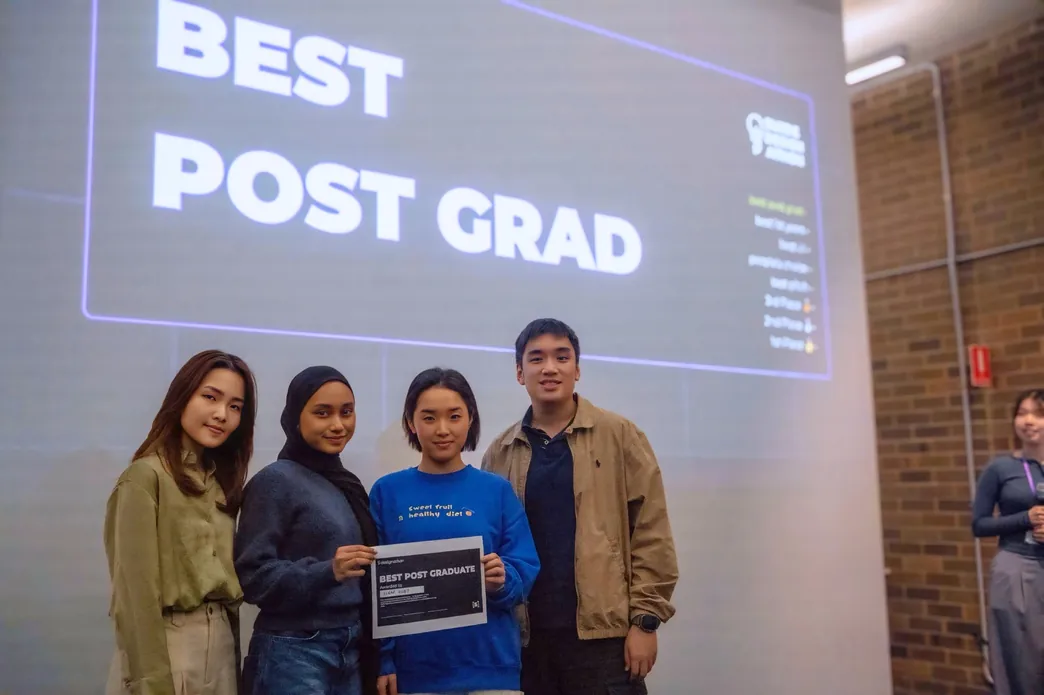
The solution earned Best Postgraduate Award among competing teams.
Challenge
Given the urgent need for sustainable living practices, design a user-friendly solution that enables individuals to adopt consistent, impactful food sustainability behaviors while maintaining convenience and affordability in their daily lives.
Solution
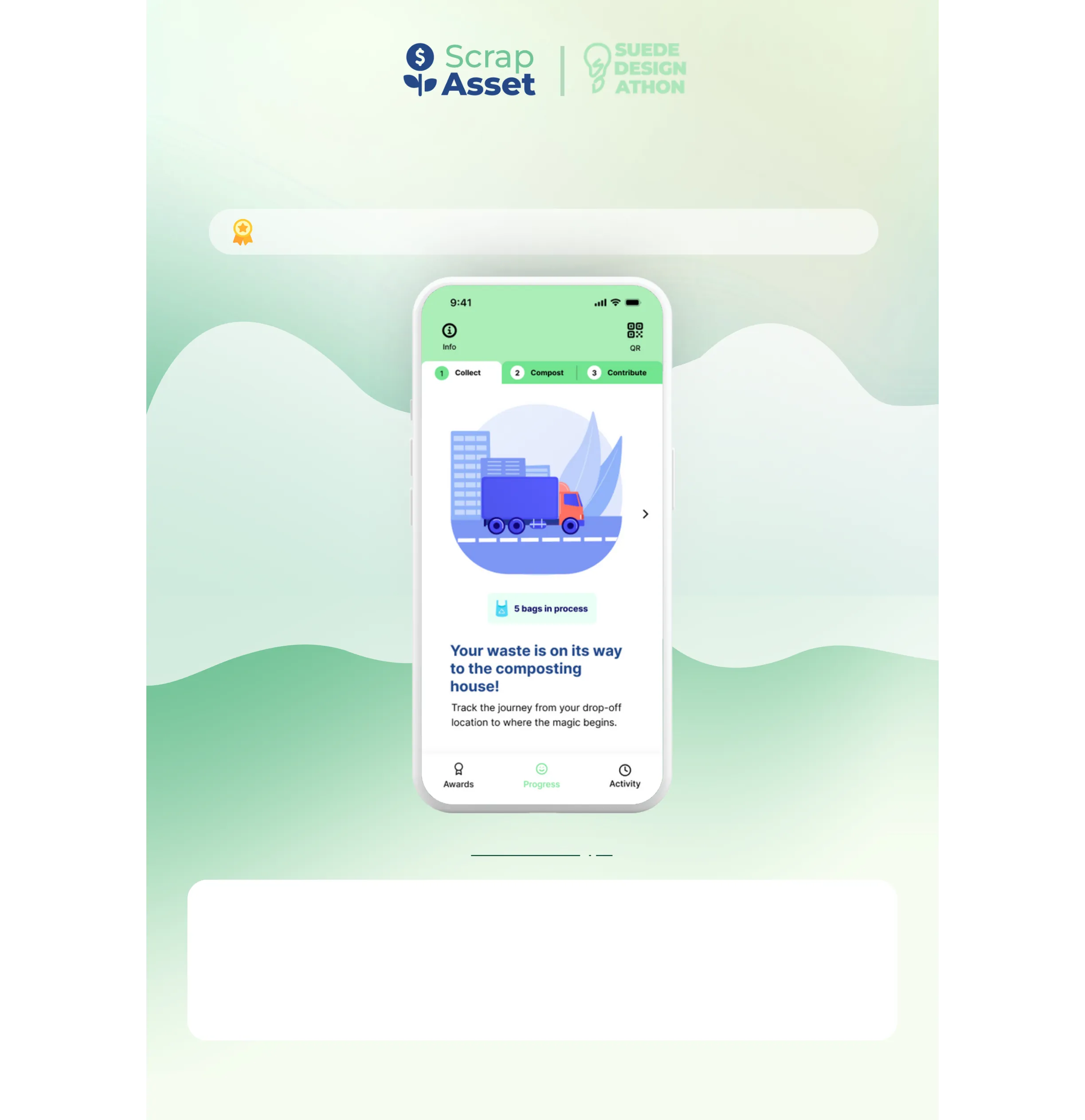
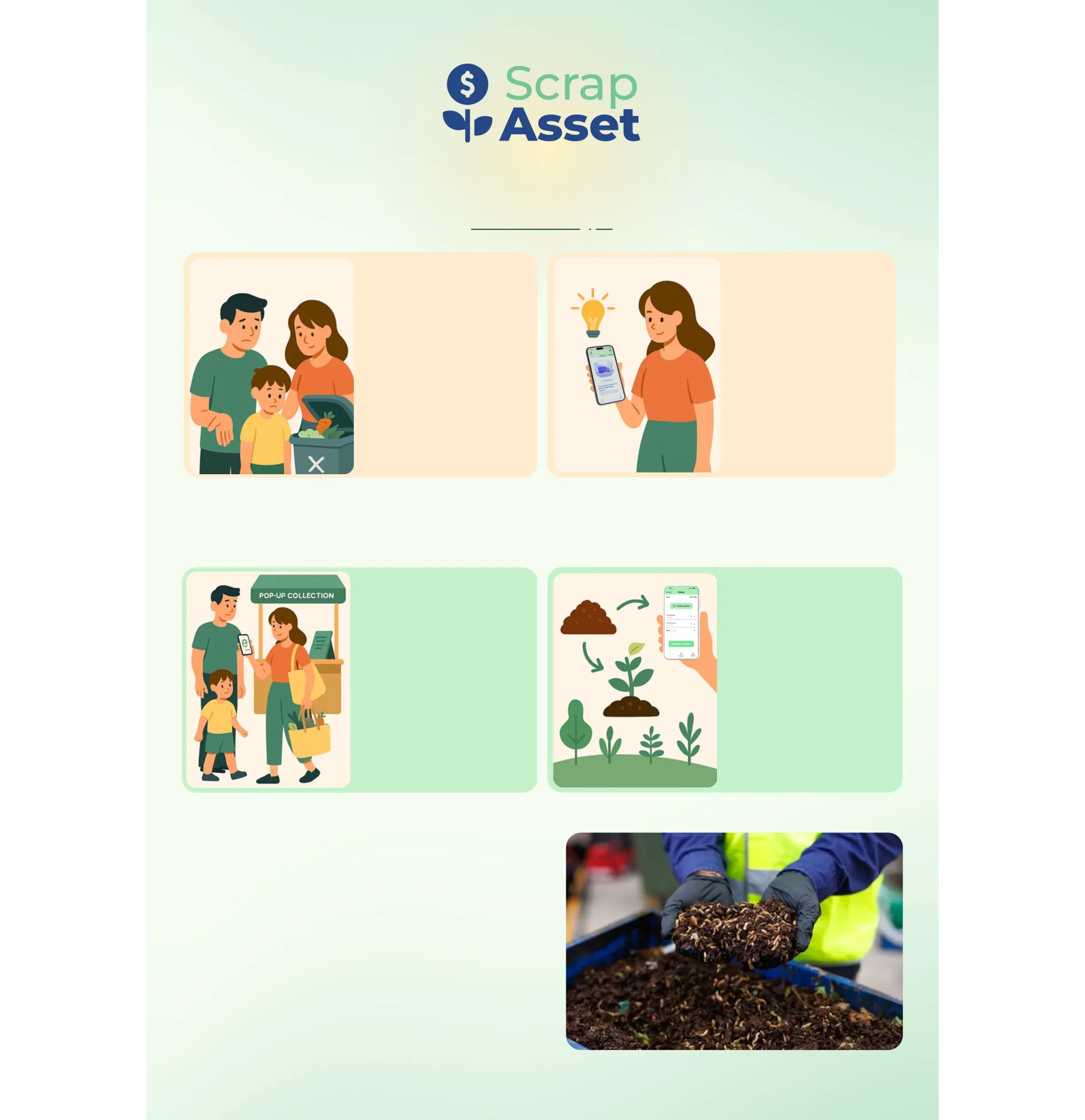
ScrapAsset is a mobile app that rewards users for composting food waste at community collection points. Users can see their scraps transform into compost for local farmers while earning redeemable points, making sustainable behaviour both rewarding and transparent.
Introduction

Hey, what do you think is the solution for food waste?
Easy… Just plan your grocery shopping better and only buy what you need!

If only it were that simple. I can plan all I want, but when my 3-year-old suddenly decides they hate the pasta they loved yesterday, or when my toddler only eats two bites of dinner… that food is going straight to waste no matter how well I planned…

Design Methodology
We adapted the traditional double-diamond process for the 24-hour constraint, focusing on reaching baseline understanding at each stage first before proceeding to deeper exploration.
I contributed to all sprint phases while specialising in research and communication, focusing on articulating our findings’ significance and justifying design decisions.
Research and Findings
Secondary Research
The scale of the problem
Our background research revealed the staggering scale:
Australians waste 7.6 million tonnes of food annually, with the average household discarding $3,800 worth of food.
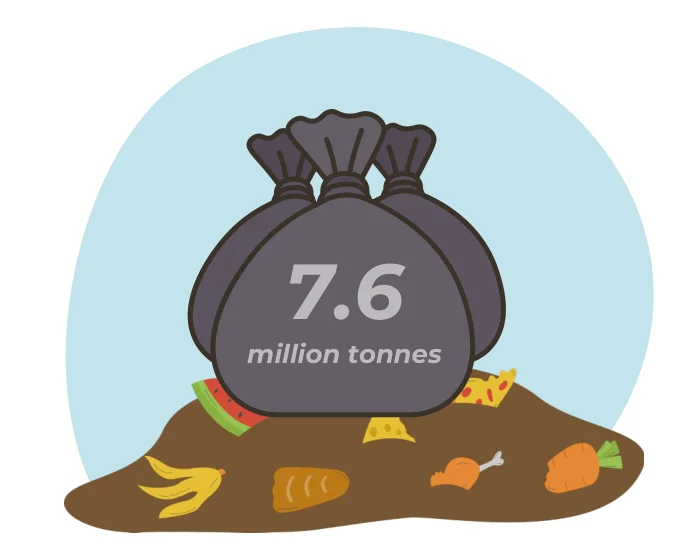
34% of food waste occurring at household level
Families with children under 17 waste considerably more food compared to the national average (up to 2.5 kg per household versus the national benchmark) due to unpredictable children’s appetites.
The Reality Check

Therefore, some degree of food waste is unfortunately unavoidable, particularly for families with children under 17, who contribute considerably more waste than the national average.
This makes composting a sensible solution (Schmidt & Robinson, 2023).
However, fewer than one in three Australian households have access to food waste collection services, particularly apartment dwellers.
Primary Research
Online ethnography
To understand real user experiences, we conducted ethnographic research across social platforms, revealing these critical insights aligned with our secondary research:
Key insights
- Inevitable waste for working families with young children
- People are actively looking for ways to reduce food waste
- The need for information to start or access composting
What users said
“Yes they are very young (2.6 and 3), and I do understand that waste is kinda inevitable. I was more looking for some insight on what to do with the left overs…”
“I will generally plan a meal for our family, but also have something on the side just in case … and he just eats a sandwich or whatever for dinner…”
“Any access to compost where you are…”
(Reddit)
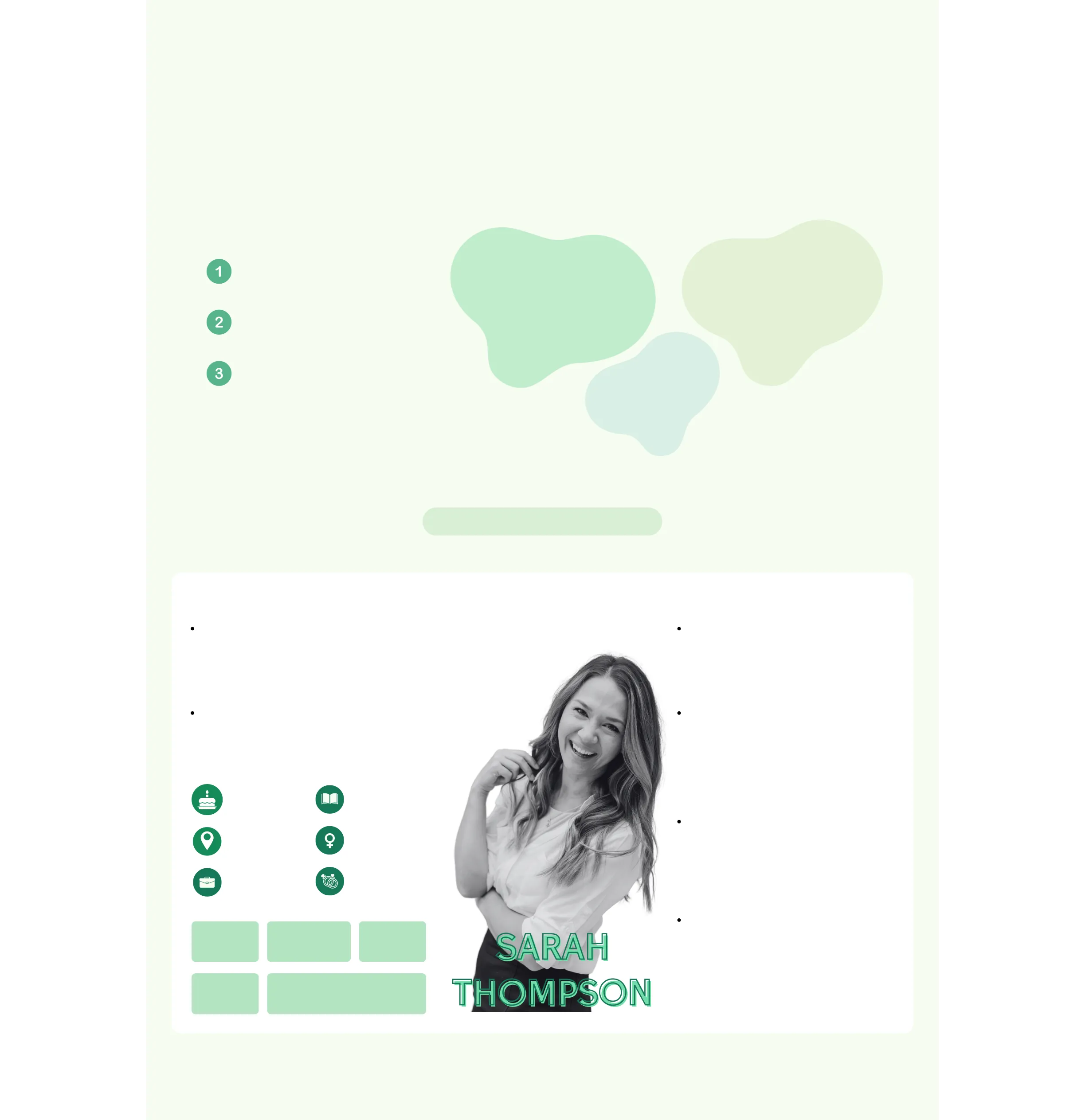
Meet Our Persona
Motivations
- Saving money: to be financially responsible and minimise household expenses by reducing food waste, as she is aware of how much money is lost due to wasted food.
- Contributing to a good environmental cause: driven by a desire to support environmental causes, she wants to reduce her food waste as part of her commitment to sustainability.
- Age
- 38 years old
- Education
- Bachelors
- Location
- Sydney
- Gender
- Female
- Work
- Marketing
- Family
- Married with 2 kids
- Caring
- Family Oriented
- Hard-Worker
- Spender
- Environmentally conscious

Thompson
Goals
- Reduce food waste efficiently: driven by both financial savings and environmental impact, Sarah seeks a simple and effective method to minimise her household’s food waste.
- Ensure the family is well-fed: Sarah prefers to over-cater for her family, even if it means over-purchasing food, as her ultimate aim is to meet every family member’s needs.
Pain points
- Unpredictable children’s appetite: despite careful grocery planning, Sarah often faces food waste due to her children’s inconsistent appetites and habits, with unfinished meals regularly going to waste.
- Limited access to organic waste management: living in an apartment makes it difficult for Sarah’s family to use compost bins or access local composting facilities, further complicating their food waste management.
Reframed Problem Brief
How might we encourage city residents to adopt sustainable food waste composting practices by incentivising the process?
Iterations
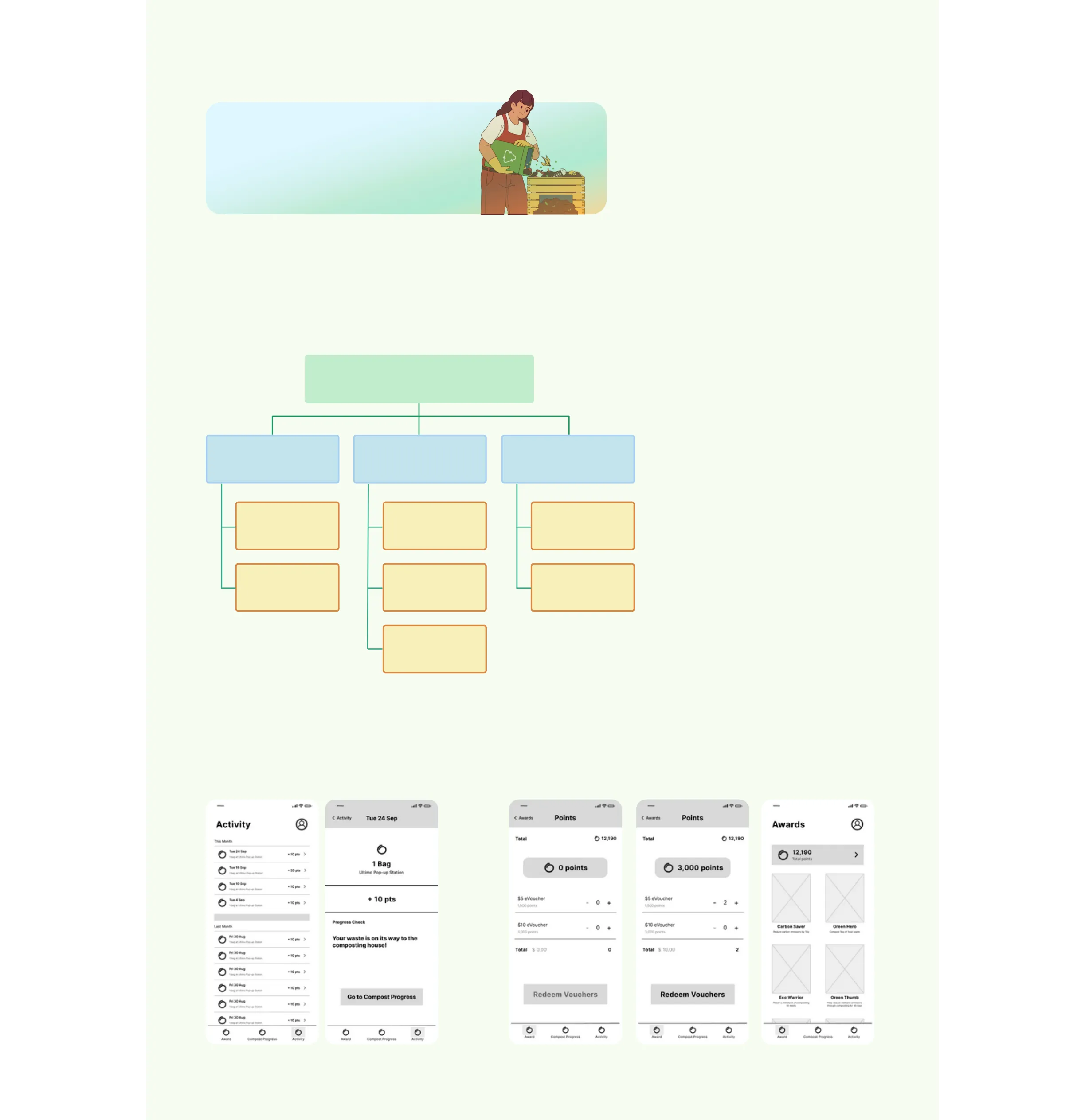
Information Architecture
- Redeem points to vouchers
- Badges / Achievements
- Collect
- Compost
- Contribute
- Drop-off History
- Progress Check
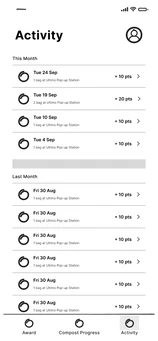
Low-Fidelity Wireframes
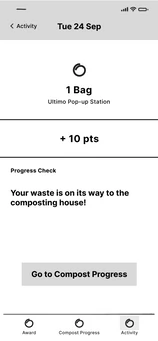
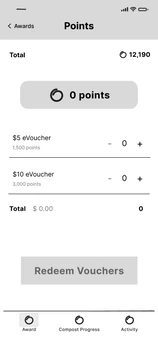
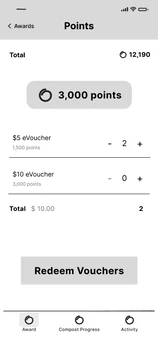
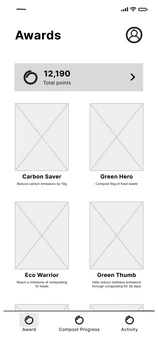
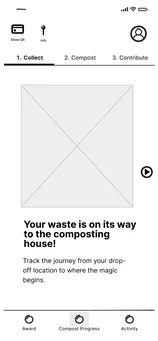
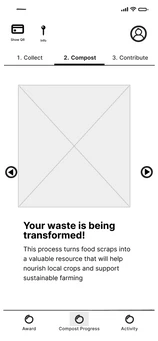
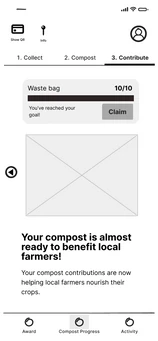
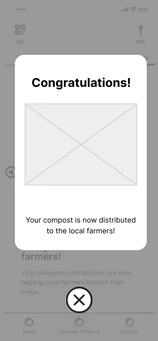
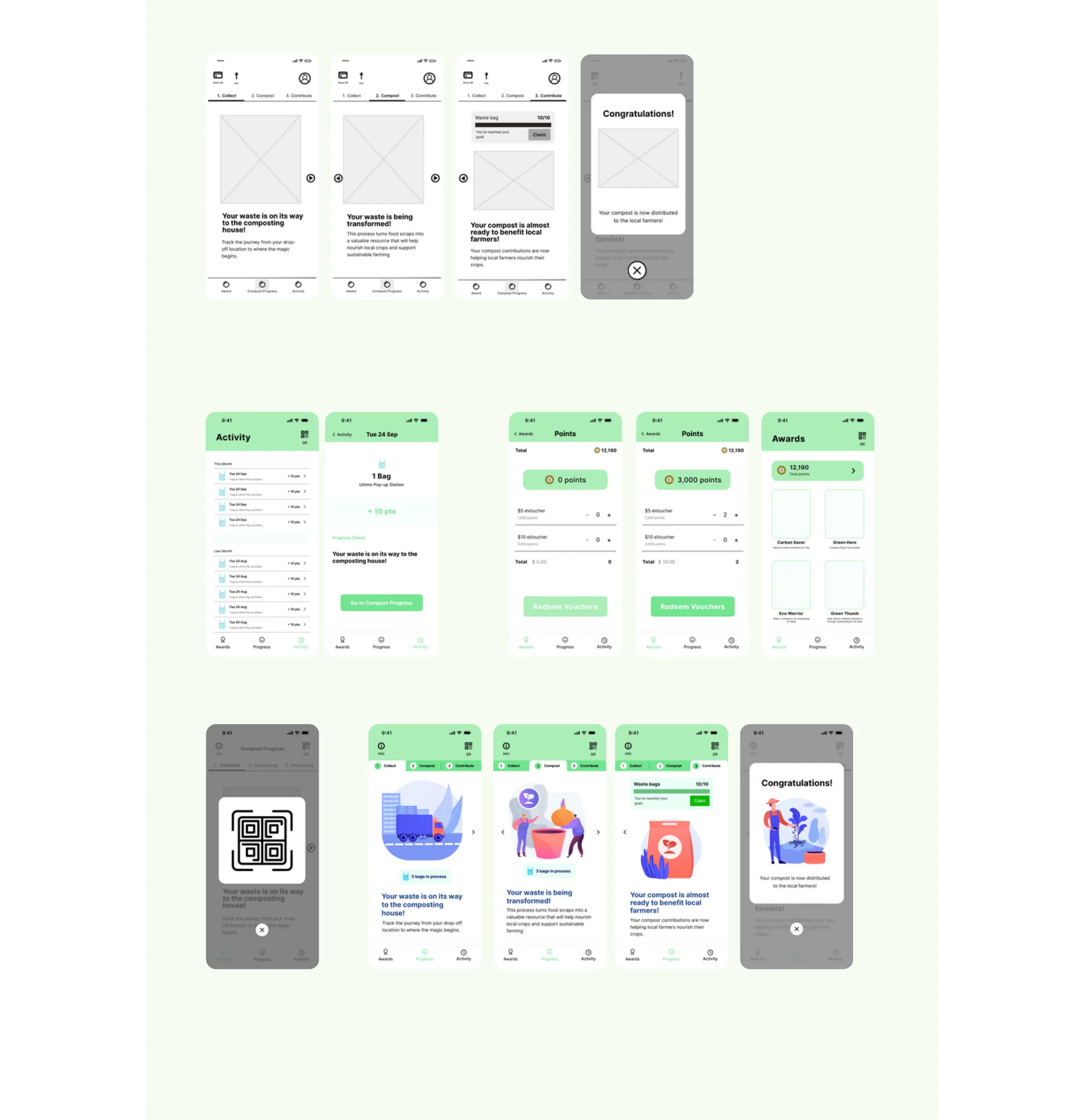
High-Fidelity
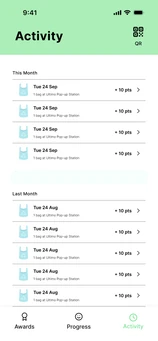
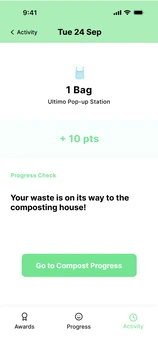
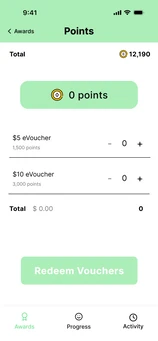
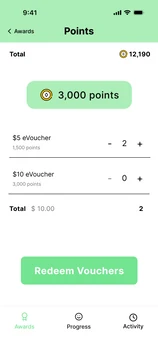
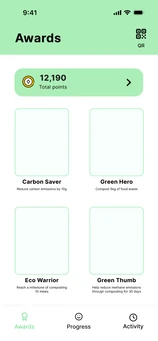
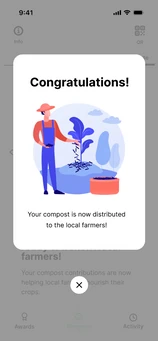
Design Outcome

While food waste prevention, such as careful planning, remains ideal, our research confirmed that food waste is inevitable for families, particularly those with young children whose eating habits are unpredictable.

Rather than fighting this reality, ScrapAsset provides a solution for handling unavoidable food waste responsibly.
Our solution aims to motivate participation in food waste transformation practices instead of letting scraps end up in landfill bins. It is centred around two key drivers for sustainable behaviour change:

Accessibility
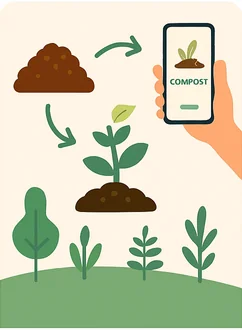
Making composting as easy as throwing food away, through convenient pop-up collection stations in communities.
Incentivisation
Rewarding responsible disposal with both redeemable points and the meaningful impact of transforming their food waste into compost for local farmers.
ScrapAsset builds upon existing successful infrastructure, which currently lacks user engagement and impact transparency.
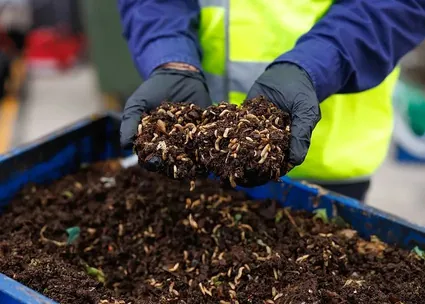
The City of Sydney already operates food waste collection points (including pop-ups in Ultimo) and partners with Goterra to process waste using black soldier fly larvae at their Alexandria facility (Business News Australia, 2025; City of Sydney, n.d.).
Real-Time Update Visualisation
-
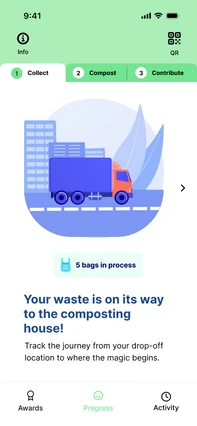 Collect
 -
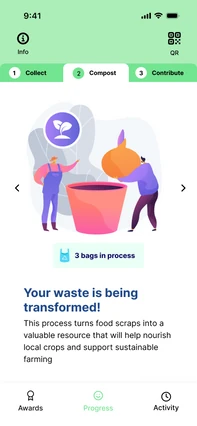 Compost
 -
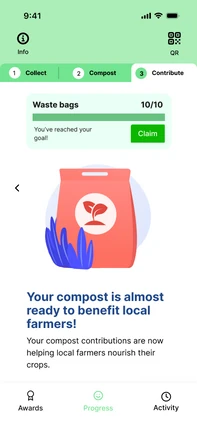 Contribute

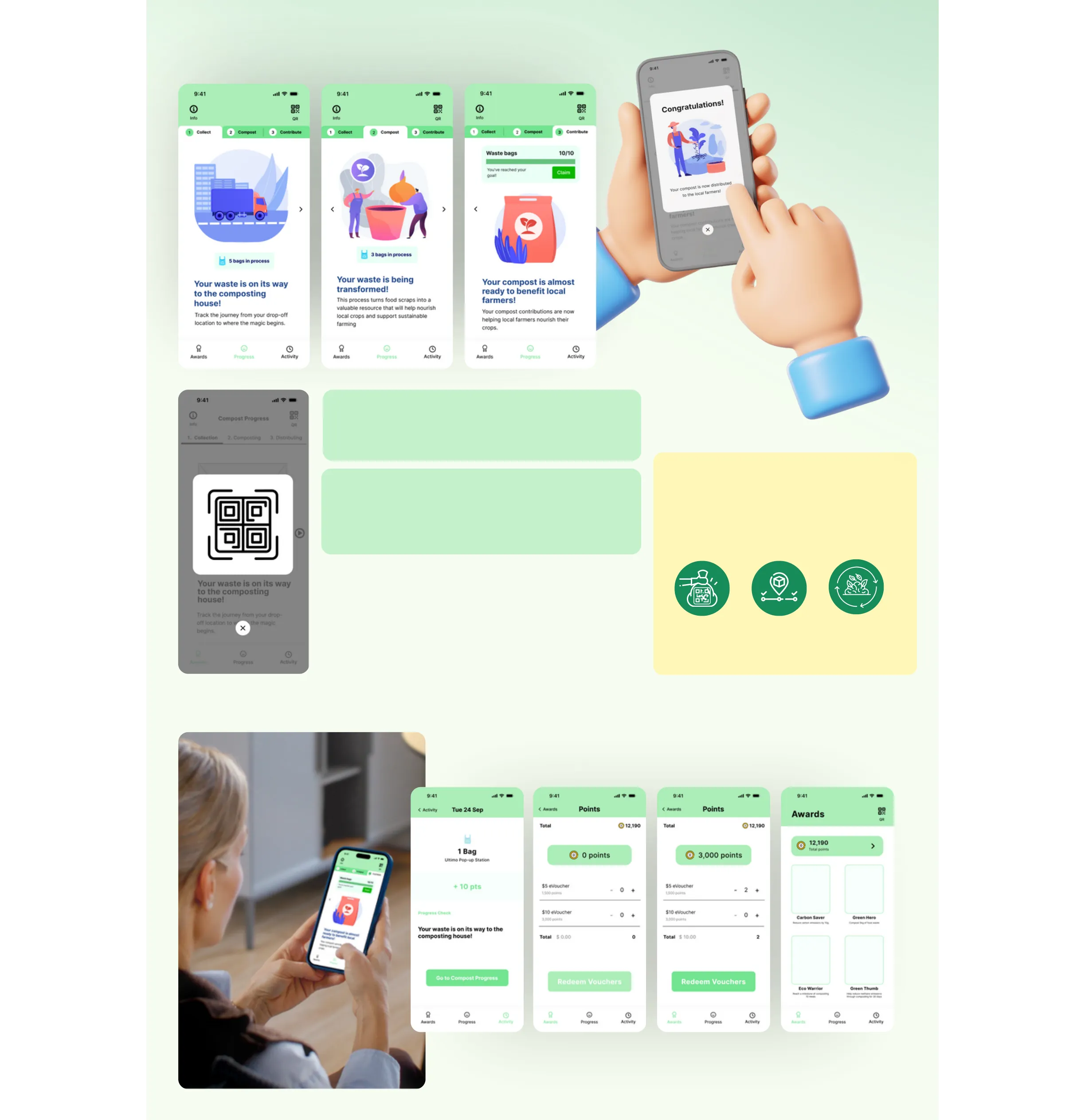
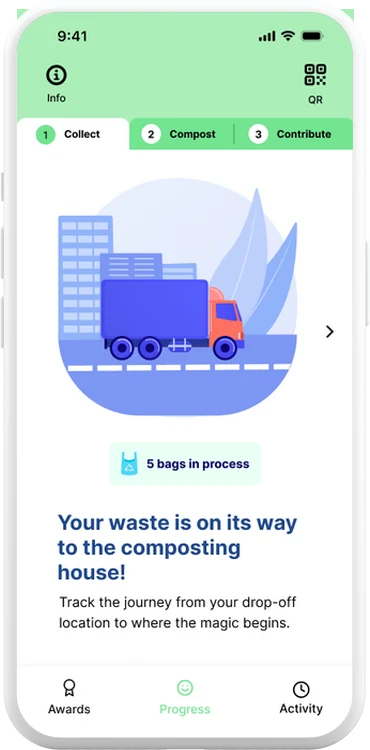
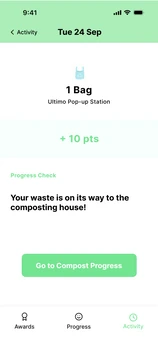
Real-time updates and visualisations show users how their waste is transformed and used, making the process transparent and engaging.
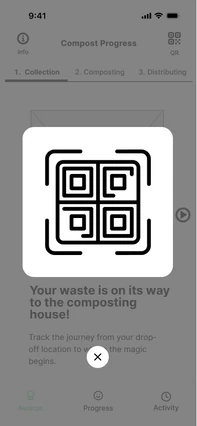
Through QR code scanning when users drop off their food waste at collection stations, each bag is individually identified and synchronised with the user’s app journey.
Most composting programs fail because people can’t track their waste. They question whether it truly “goes into the right hands” or just ends up in landfill anyway.
This uncertainty undermines motivation to participate in sustainable practices.
Rewards System
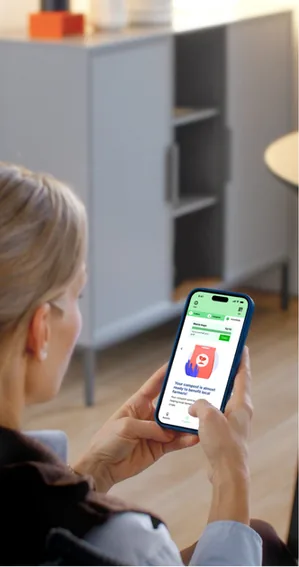
Beyond creating meaningful impact, the incentive system rewards users with vouchers, providing economic benefits for participating.
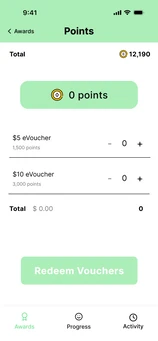
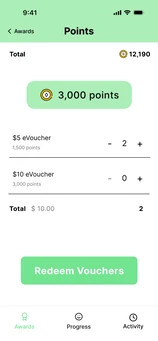
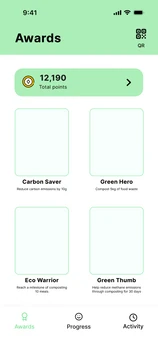
Users find nearby stations, earn credits, and redeem rewards, similar to Flybuys or Everyday Rewards.
Learning & Takeaways
ScrapAsset was my first Designathon experience working under a 24-hour constraint. Initially, the tight timeline felt overwhelming because sometimes meaningful insights can’t be forced. However, I discovered that time itself was not our greatest challenge.
Our perception of time, whether we viewed it as scarce or sufficient, fundamentally shaped how we approached problems and made decisions.
What made the difference was our team’s collaborative foundation. We maintained open communication about uncertainties, offered immediate support when someone struggled, and approached every obstacle as a shared challenge rather than individual stress.
ScrapAsset taught me that exceptional teamwork can transcend time limitations. When the team trusts and communicates well, even tight deadlines become manageable.
Reference List
- Business News Australia. (2025, March 17). Goterra’s system eats through 90 tonnes of Sydney food waste. Business News Australia
- City of Sydney. (n.d.). Food scraps recycling service. cityofsydney.nsw.gov.au
- Foodbank. (2022, September 29). Stop Food Waste Australia: Media release. Foodbank Australia
- Karunasena, G. G., & Pearson, D. (2021). Australian household food waste: A summary of behaviours, attitudes, perceived and actual food waste. Fight Food Waste Limited. PDF
- Schmidt, S., & Robinson, N. (2023, June 13). The case for compost: why recycling food waste is so much better than sending it to landfill. The Conversation
- Stop Food Waste Australia. (n.d.). Australians want to waste less food but are unaware how much food they’re really throwing away.